In honor of the new Argentinian Jesuit pope just elected last week, here is a post about the UNESCO World Heritage Sites of central Argentina -- the Jesuit heritage surrounding the city of Cordoba.
I do apologize if showing photos of this tourist brochure offend -- I am not intending to copyright anything but merely to share information! It was so difficult to get information when we were in Argentina, and this was the best collection of information out there.


The first site to visit is Cordoba itself with it's Jesuit heart. Unfortunately for us, we arrived on a Sunday, so nothing was open, but we managed to get into a few of the churches and of course wander the streets.
 |
| The architect of this church was a ship builder before, which is why the roof is so reminiscent of a ship's hull, but of course, beautifully decorated. It is one of the oldest buildings in Argentina. |
 |
| The streets had tiled 'shadows' which were very cool. |
 |
| Cordoba Cathedral |


Driving north out of Cordoba, there is a straight highway, and it's easy to wonder why it was that the monasteries were built here in the middle of the plains, but the reality is, they were closer to the mountains and their rich yeilds provided the cities with food and other provisions. Warning to drivers: finding these ranches is a mission as they are poorly signposted and often in a totally different place than many brochures give the impression of.


.JPG)
The first mission we went to was the Jesus Maria -- a beautiful farm on the edge of the town of the same name, it is set in grounds with a large reservoir, a nearby campsite, and separate servants buildings. The church is closed, but you can enter a small upper balcony to look over it. It has a museum of art and religious relics. The toilets are interesting, especially the complicated plumbing system using water to clear out the smells and mess from what was an indoor system well before that was normal. The site was strictly non-photography and we didn't see another soul despite the folk festival that was on in the town.


Just down the road was the Estancia Caroya, in the middle of a tree-less field with many outbuildings showing the farm system -- a slaughterhouse, a mill, an energy generator, etc. It had a much more friendly vibe with the caretaker welcoming us in, encouraging photographs and generally wanting to make us interested in the place. It had a charming courtyard and many farm relics and furniture left from the ranch. It also had an interesting exhibition on the immigration to Argentina.


After driving truly into the rural areas away from any main roads or towns, we reached the Estancia Santa Catalina, really off in the middle of nowhere! Alas, it is closed on Mondays, but we had a lovely lunch in the gardens of the former servant quarters which is now a small bed and breakfast lodge with a lovely hostess.
.JPG)

The next day, after driving all over the adjacent valley, we went to Alta Gracia, which is almost back in Cordoba but on the other side of the city. On account of its closeness, this was the busiest of all the monasteries with many visitors and a crowded, overrun feeling. The hosts were no longer charming and welcoming but tired of visitors and constantly shooing people onward or telling them to leave where they weren't supposed to be!


The only one we didn't make it to was this one: La Candelaria. It was several hours drive into the mountains, far from any other towns and very far from Cordoba. Alas, time was limited, but I bet that it is probably the prettiest and the least touristy, and the least visited. One day I will get back there, I hope! They really were peaceful places that I'm sure were absolutely amazing in their time. They would sponsor whole schools and universities in the cities and they were innovative in their time, and important community centers. All were taken over and lost to private owners in various ways when the Jesuits were banned from all the Spanish realms. And just think -- now we have a Jesuit pope!


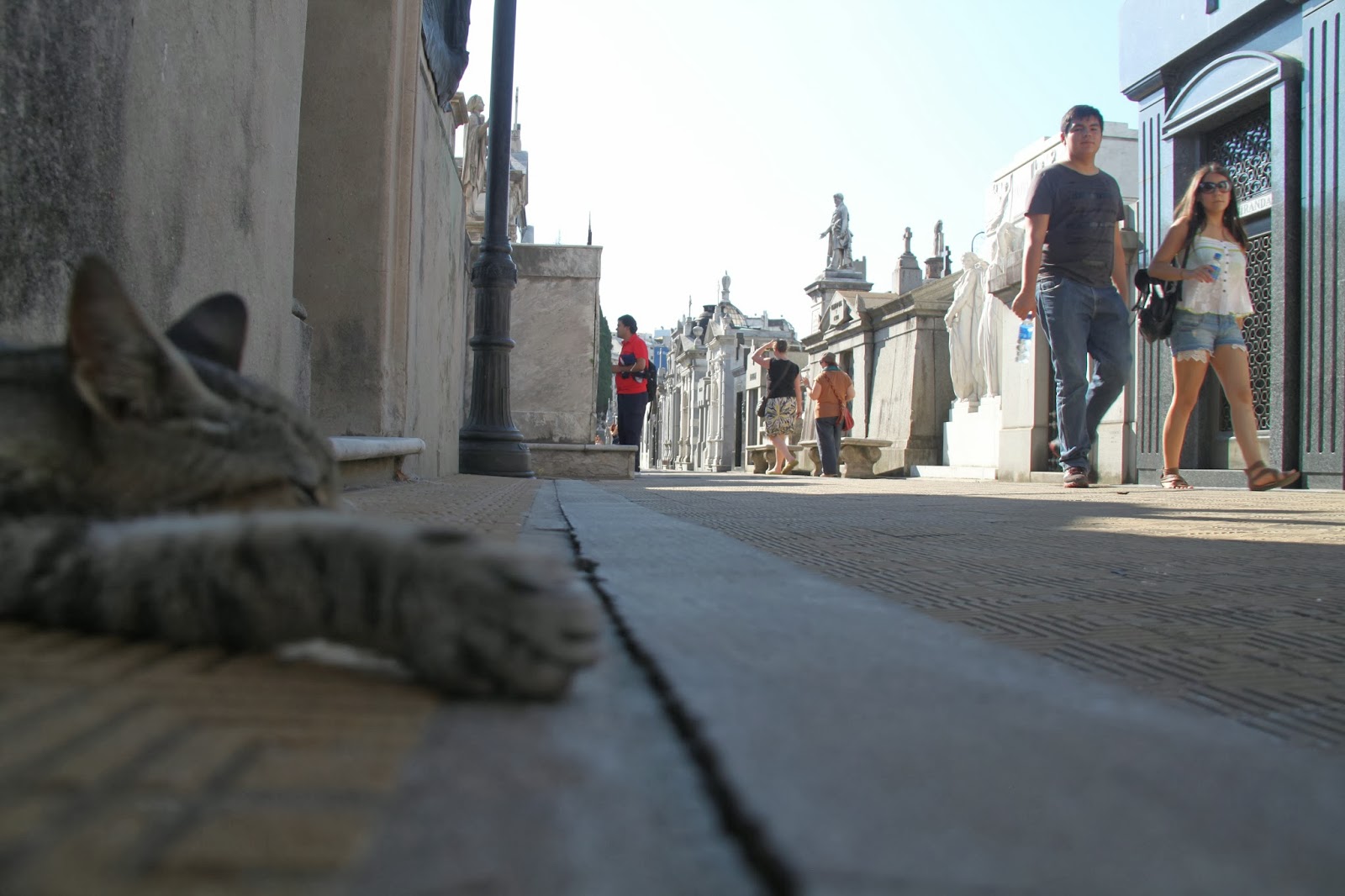
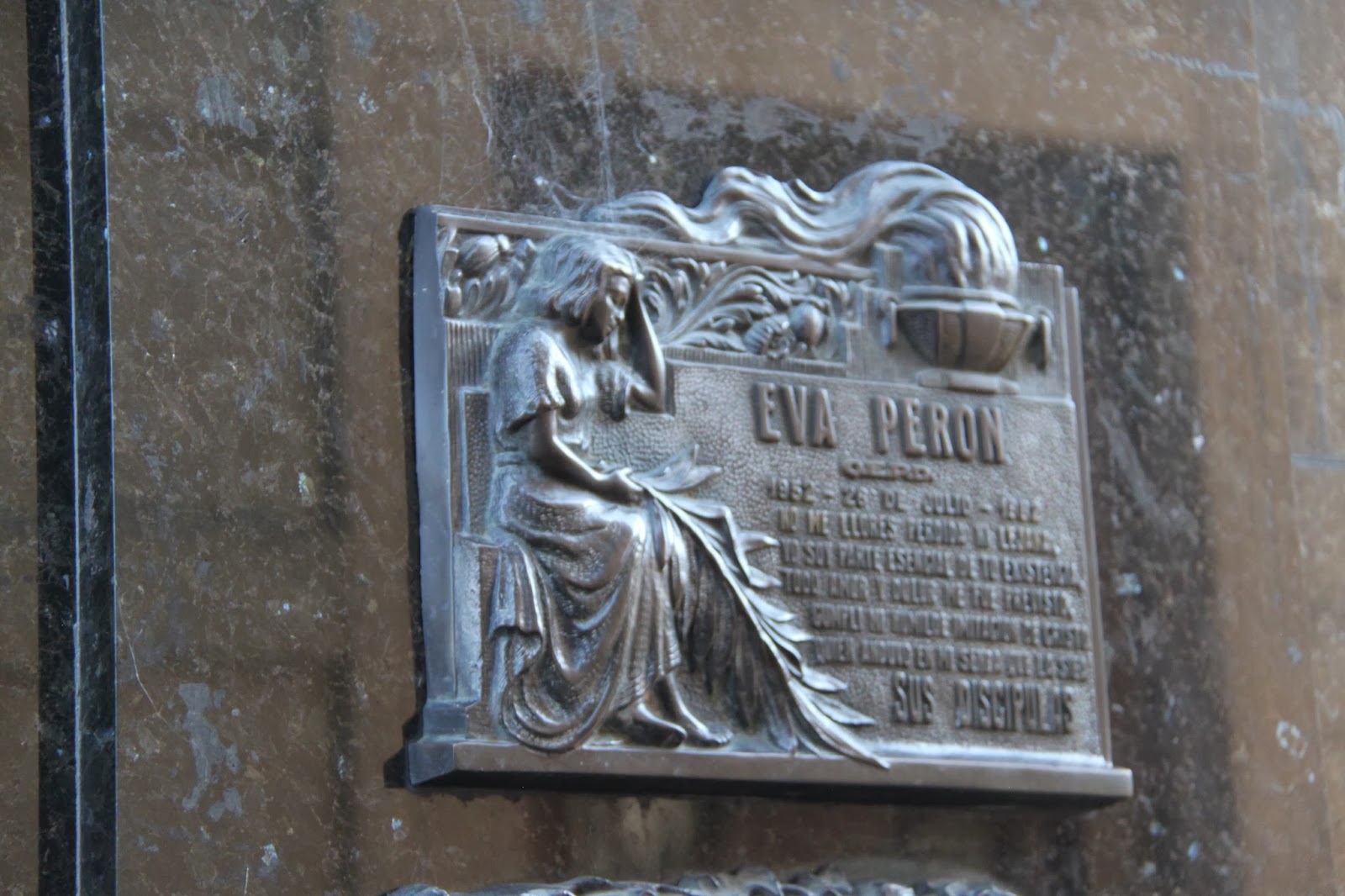
 Amidst the urban sprawl and rich suburbs of Buenos Aires lies a remarkable cemetery. Perhaps not unique in the world, nor is the style of it unusual (there is one in Bogota, albeit much smaller, just down the road). This one is, however, a huge tourist attraction. Perhaps it is not the style or the habit, or the gothic morbid fascination that people hold for death and the afterlife, but it has been made famous because of Evita. This is Former Argentine First Lady Eva Peron's final resting place and it has become a place of pilgrimage and fascination for many.
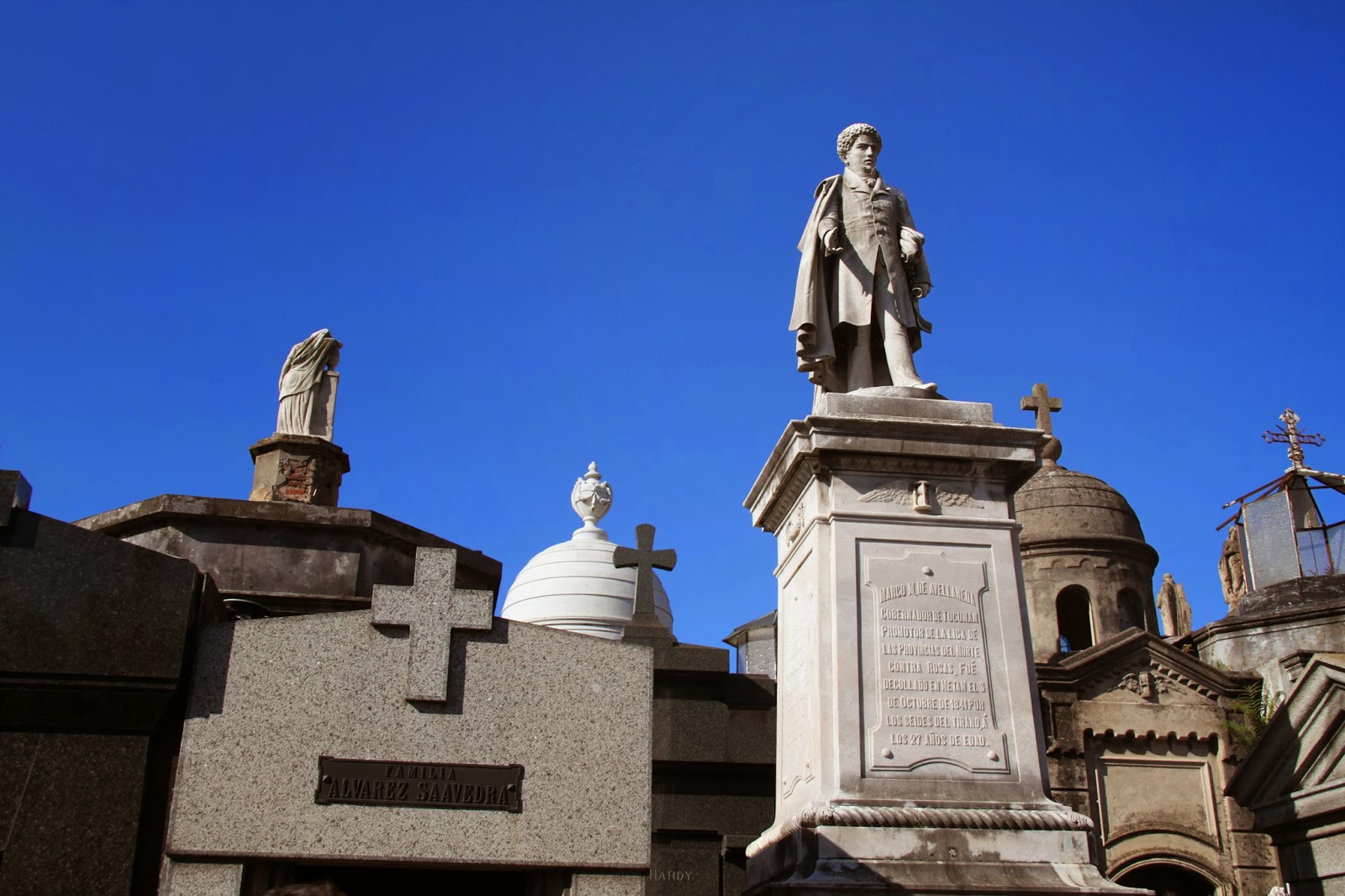
 In this city within the city, the streets are lined with marvelous tombs decorated in the most over-the-top manner, and often a peek inside will yield a glimpse of the tomb going down several floors to the family's ancestor's. Each mausoleum, crypt or tomb is unique and special and the styles vary from art deco to art nouveau, to baroque or neo-gothic.
 This cemetery is a glimpse into the lives *ahem* deaths, of the rich and famous. 4691 crypts hold politicians, presidents (at least 10!), generals, caudillos, coronels, and heroes, and everyone else who was anyone. 94 are so important as to be declared national monuments. There's a famous boxer, a Chemistry Nobel Laureate, governors, patriots, writers and diplomats. The blog http://www.recoletacemetery.com/ has an amazing collection of stories about the who's who, with photos and details of both the tomb and their lives. Built around the Church Our Lady of Pilar in the early 18th century, it became public land after 1822 upon decrees of the Governor of the time. It's layout was designed by a French architect, and it was remodeled occasionally, but most recently in 1881.





.JPG)


.JPG)


