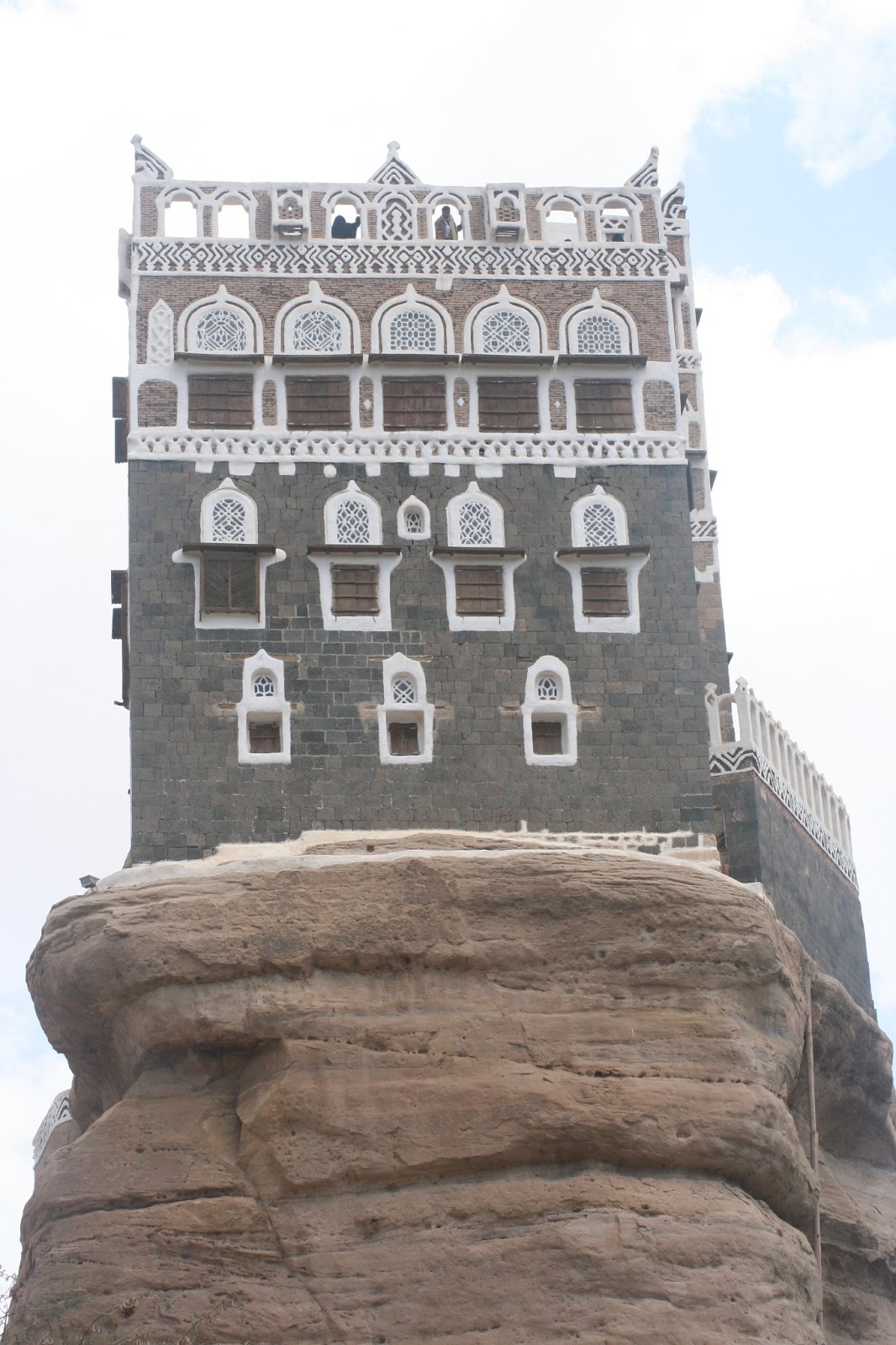
In the middle of the southern Yemen highlands at 1400m, at the foot of the impressive Sabir Mountain (3006m), lies this fascinating city: an old jewish center, a royal capital of the Rasulid Dynasty (c1280s), a walled city until 1948, a trade hub, a religious center, a town of universities, just above the border between North and South Yemen: Ta'izz. The third largest city in Yemen after Sana'a (#985) and Aden (#942), it was fortified/re-settled by Salah al-Din's brother Mahdi (aka Turanshah) in 1173 and it was the capital of "Yemen" from then for around 400 years (and again from 1948 to 1962). When Ibn Battuta, the famed 14th century Muslim traveller visited, he described Taiz as 'one of the largest and most beautiful cities'.
 Known for both historically and now, for coffee production, and it is not far from the historical port of Mocha. It is also a center for learning with many of the country's universities. The city even has a traditional Muslim madrasa that has university status. Urban sprawl has removed some of the beauty of the city, which started to emerge beyond its original walls after 1948. It is cosmopolitan, full of students and has a very interesting museum. Sadly, as in most of Yemen in recent times it has been a center for extremists -- both Islamists and left-wing secularists fight for territory and influence in the city. In October 2013, the assassination of a tribal leader led to significant instability and violence in the city. A power vacuum persists and general instability has changed it from the placid place I visited in 2007.
 Within the city (aside from it's fascinating narrow-alley-streets old town and market/souq specializing in cheese, fried fish and silver jewellery), there are many historical monuments to see. The most famous mosques are the 628CE Ashrafiyyah (which can be entered by tourists who come to see the tombs of al-Ashrafa, his wife, his father, his sons, and his primary security guard), the Mu'tabiyya (also built by Ashrafa, and was traditionally, but no longer, just a woman's mosque), Modhafar (the oldest mosque in Taiz, built by Ashrafa's great-grandfather, the namesake) and the Abd al-Hadi, built in commemoration of a Sufi saint in 1618. A secret door was found in 2005 leading to an underground room in the Ashrafiyyah mosque, but it was not found full of treasure, only with access to the tombs. There are two old gates to the old city - Bab al Kabeer (The Great Gate) and the Bab a-Musa (The Gate of Moses). The citadel and governor's palace "Cairo Castle" rest on the top of a mountain peak 450m above the city center with spectacular (if hazy) views over the basin of the city. This large fortification is currently being renovated using river stones and original building techniques.


Source: Lonely Planet Oman, UAE, & Arabian Peninsula 2nd Edition 2007
http://en.wikipedia.org/wiki/Ta'izz
http://www.yementourism.com/tourism2009/destinations/index.php?ELEMENT_ID=2681 (Their source is the Bradt guide to Yemen)
http://www.economist.com/news/middle-east-and-africa/21588123-once-seen-yemens-most-sophisticated-city-taiz-bad-way-city-edge
http://www.csmonitor.com/World/Security-Watch/2013/1004/Once-stable-a-proud-Yemeni-city-struggles-to-hold-on-amid-violence