
Dubrovnik and the French Riviera may have the fame, but Budva has some history! The hub of the Montenegrin holiday coast where the rich and famous used to holiday, like Elizabeth Taylor and Richard Burton (although so many cities claim this), Budva is a glamorous Adriatic destination. The breakup of Yugoslavia may have kept people away from it and highlighted alternative destinations, but Montenegro's recent peaceful split from Serbia may allow it to come to the forefront again. The drive in down the windy mountain road is reminiscent of a James Bond film and the historical city (Stari Grad) sits out on a spectacular peninsula location (once said to have been an island). Although perhaps not as sparkling as it once was (Montenegro's economy struggles to keep up with it's rich neighbor, Croatia), it is still beautiful.


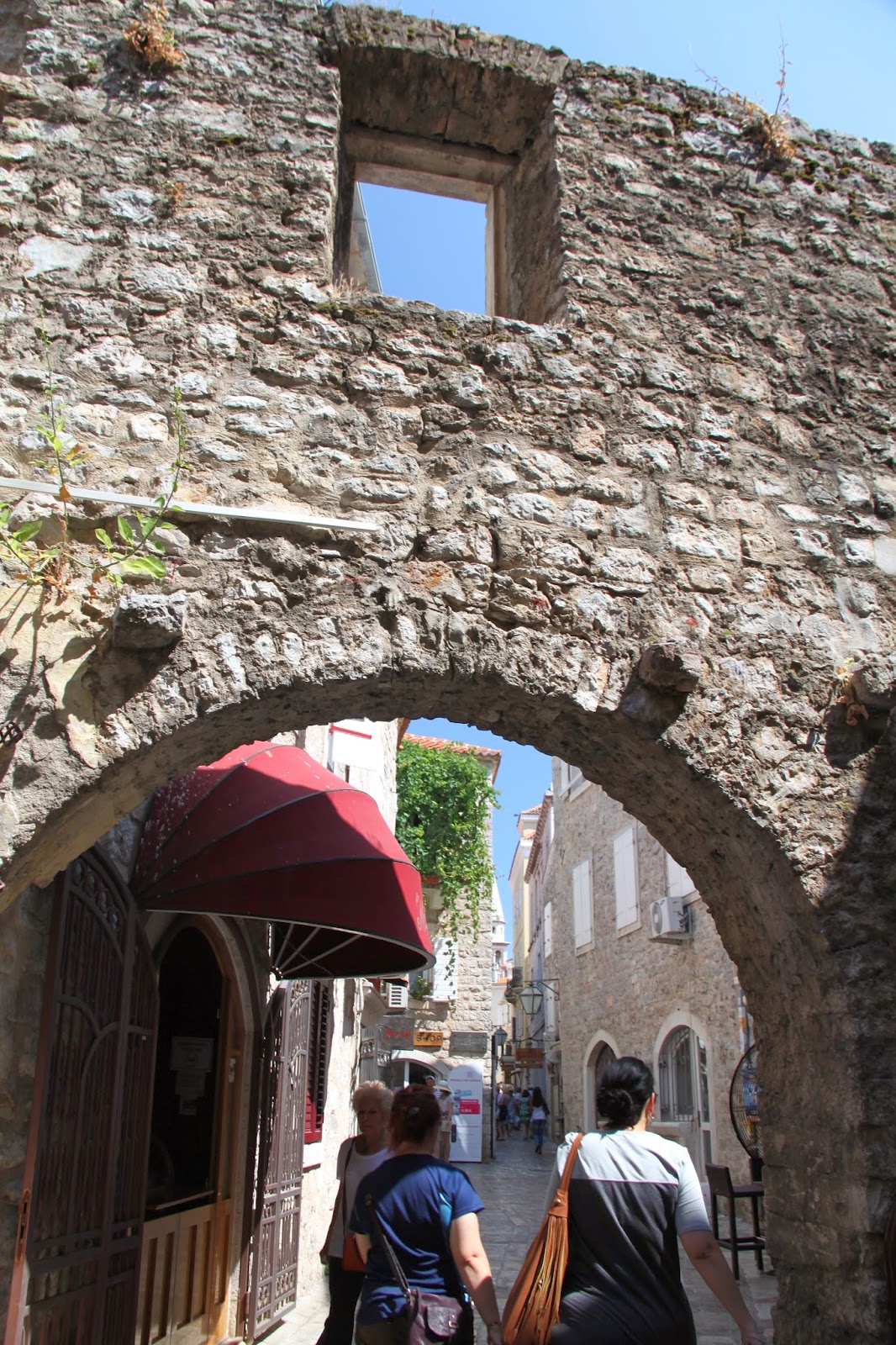


 Stunning beaches are backed up by large hotels, charming cafes and shops line most roads, and it hosts a national music festival and a summer festival in July and August. This is a tourist hub! The old city was leveled by two earthquakes in 1979, it was completely rebuilt.


 3500 years old, it is the one of the oldest settlements on the Adriatic coast. Founded by the hero Cadmus the Phoenician who settled here with his wife Harmonia after being exiled from Thebes. It was later settled by the Greeks and the Romans who named the area Butua. It was a boundary area between the eastern and western Roman empires and was later ruled by Doclean kings, Serbian and Zetan aristocrats, Venetians for 400 years from 1420 to 1797, only to be attacked by the Ottomans and then passed around from Austria to France to Russia. From 1918 it was in the Kingdom of Yugoslavia, but then, in World War II it was Italian. The style of the old city, not surprisingly is quite Venetian, though the whole area is typically 'Mediterranean'. It is a very popular summer destination!


Source: Lonely Planet Eastern Europe 8th Edition 2005


