Sunday, February 10, 2013

#871 Ibn Battuta Mall, Dubai, United Arab Emirates

Where in the world can you travel many countries and continents in comfort in less than an afternoon? I really hate to be an advertisement, but of any mall I have ever been to in the world, this one has had the most imagination and the most beautiful design -- the Ibn Battuta Mall in Dubai in the UAE. It may not be as record breaking as the Dubai Mall under the Burj tower, but it is more pleasant and every visitor should learn something -- about the namesake Ibn Battuta.

Ibn Battuta was a Moroccan traveller who went around the world centuries before Marco Polo, his most famous European equivalent. He went across the Middle East, completed his Hajj pilgrimmage to Mecca and continued on through India and Asia to China. In order to replicate his route (focusing on the more famous parts, of course!) the mall progresses from China court at one end, which has a food hall and cinema along with an enormous Chinese junk boat, through India Court, Persia Court, Egypt Court, Tunisia Court to finally Andalusia at the other end.

Unfortunately, every time I went there I was not taking photos but focusing on shopping so none of the following photos are mine. It takes a good 15 minutes to walk from end to end as its 1.3km long, unless you get the convenient train!

China Court. Image from www.ianandwendy.com

India Court. Image from tripadvisor.com
Egypt Court. Image from timeoutdubai.com
Egypt Court from the outside. Image from flickr.com
Persia Court. Photo from madiganburke.blogspot.com. If you look closely at the Persia Court tiles you will see that they are not really tiles. Innovative workers painted these beautiful creations instead. While this may be a disappointment for traditionalists, it is smart on a commercial scale -- and still beautiful!
Persia Court. Image from www.tripadvisor.com
Tunisia Court. Image from www.uae-businessdirectory.com
Andalusia Court. Image from travelblog.org
While I am not wishing to advertise a company, the mall website can be found here.

Saturday, February 9, 2013

#872 Perito Moreno Glacier, Argentina

In any tourist brochure of Argentina, it is likely that there will be a photo of the Perito Moreno Glacier in Los Glaciares National Park. Perito Moreno isn't the largest glacier, nor the widest, but it's unique feature is that it buttresses up against a peninsula making it very easy to see it from above, allowing visitors to imagine how all glaciers calved valleys and lakes across the world. The other really cool thing about it is that when it hits the peninsula it forms a natural dam, causing the southern arm of Lago Argentino to be dammed and blocked from releasing its water into the main lake. Over time of course, the pressure builds up -- occasionally this breaks in a spectacular burst as the water pushes through all at once, but more often this carves a river under the glacier forming an ice-bridge (see pictures above) which eventually falls, also spectacularly, as it becomes too weak to support the weight of ice above. 

The north side of the glacier from the water -- the peninsula can be seen to the left side.

The peninsula forms a super lookout point from which to watch and hear the glacier calving - because it is a glacier that is growing, this happens often. The many kilometers of trails also hide native plants, animals and birds. We were lucky enough to see a woodpecker up close. The glacier can also be seen from air, boat (on both north and south sides of the glacier), and some visitors even walk on parts of it.
It is just one of many glaciers in Los Glaciares National Park that come from the Southern Patagonian Ice Field (shared with Chile) -- one of the largest masses of ice in the world. The glacier was named after important 19th Century Argentinian naturalist and explorer, Francisco Moreno.

#873 Petra, Jordan

Probably on everyone's bucket list, Petra is one of the most amazing sites in the world and really deserves that place on the must-see list. Some would say that it was made famous by Indiana Jones, but it has been a wonder for millenia ever since the Nabataens built it in the centuries before Christ. Whether it is your first glimpse of the Treasury between the narrow slabs of rock (lit up in the morning sun, or in the afternoon shadows), or the hike up to the Monastery high above the valley floor, its grandeur, its seemingly perfect architecture, symmetry and form and its beautiful pink and red hues are only the beginning of the wonder. 

An enormous city complete with large ampitheatre, houses, government buildings, temples, and other structures, it was no doubt also filled with many temporary structures that form puzzle pieces long gone. The wind has softened many a line, fires lit by sheltering Bedouin have colored many a ceiling, and pathways have changed and been worn by many a donkey. It is beautiful architecture in its own right, but its magnificence is in that instead of being built up, it has been carved out of sold rock, and to enter a room that was once sold and to feel the space shows just what a feat of engineering it was. Oh, what a spectacular place it must have been!

The walk up the mountain to the sacrificial platform was fascinating -- something that no doubt many visitors would be happier to ignore. It was also not the natural formations that were so important -- the control of the water supply was what allowed the city to gain its strength. There are Greek, Syrian and Egyptian influences. Like so many other delights, it was hidden and unknown to the western world until 1812 

I dream of visiting its lesser-known cousin Medain Salah just over the border in Saudi Arabia. One day, I will!


Tuesday, February 5, 2013

#874 Ashgabat, Turkmenistan

The capital of Turkmenistan is one of the most bizzare cities I have ever visited. It feels like a ghost town, and is a frightening example of Totalitarianism at its worst. The longtime dictator of Turkmenistan who liked people to call him Turkmenbashi (father of the Turkmen), created the town from scratch after a 1948 earthquake flattened it, and it is a monument to himself in memory of his family killed there.

The buildings are statuesque and grand, if quite plain. They line the highways in repetition of white glamour. The monuments are bordering on idolatry: there was one in solid gold of Turkmenbashi himself which rotates with the sun so that he is always basking in the glory of light.

A curfew exists, and all tourists are restricted to their hotels and closely monitored. Soviet service (poor) survives, and the obligatory seedy nightclub vies with the in-house Chinese restaurant for tastlessness.

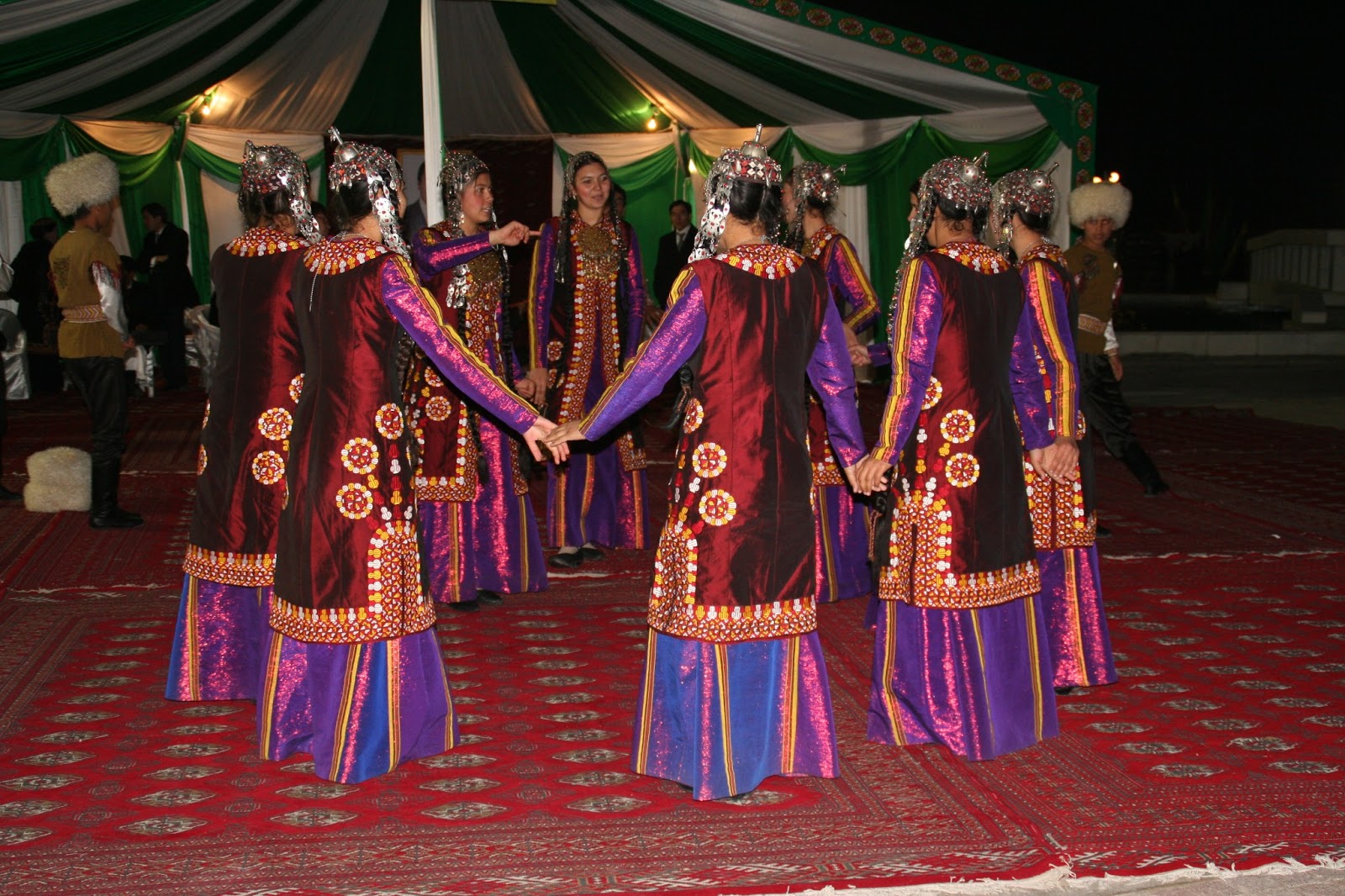
The soul of the city is in the outskirts where you can find the famous Tolkuchka bazaar. There, you can buy anything from a camel to sheep, to a teapot or a cup of tea. Many Chinese goods are imported, but they also have carpets, shawls, clothing, and foodstuff. Turkmen carpets are my favorite carpets in the world. The famous Bukhara carpets actually originate here!

In a spectacular location at the foot of the Kopet Dag mountains, with golden domes of newly built mosques, it is one of the hardest places in the world to visit, and has a long history despite its newness. The impressive Azadi mosque, Independence and Peace Monument, numerous museums and government offices survive, but in August 2010, Turkmenbashi's successor Gurbanguly Berdimuhamedov removed the Arch of Neutrality (the golden Turkmenbashi statue!) from Parliament Square.

Source: http://en.wikipedia.org/wiki/Ashgabat