Showing posts with label South America. Show all posts

Wednesday, January 28, 2015

#642 Paramaribo, Suriname


The charming riverside city of Paramaribo may be the capital of the small South American country of Suriname, but it has the feel of a small town with friendly citizens, quaint restaurants and a cute harbour. Farms are a short drive from the city centre and you can be in the wild tropical jungles of the national parks on the outskirts within a couple of hours. Of the three Guianas, it's capital is probably the safest and most dynamic, with a bizarre European feel of Amsterdam meets the Amazon, and it is famed for the diversity of its inhabitants, including Creoles, Hindustanis, Maroons, Javanese, Indigenous, Chinese, Europeans, Lebanese Brazilians, Guyanese and Jews despite it's relatively small population of just under 250,000 inhabitants.
Known locally as 'Parbo', it is located approximately 15 kilometres inland from the Atlantic Ocean on the Suriname River, and it's riverside main street is still adorned with the historic old settlement homes, recognised by UNESCO for its connection to the Dutch colonial settlement from the 17th and 18th centuries and laid out in a grid pattern from 1683, although much was destroyed in a fire in 1821.
The homes are all in timber with elaborate decorated balconies, some in various states of repair. The best ones along the 'Waterkant' riverside road catch the afternoon sun which makes their white paint sparkle. There is even one of the oldest synagogues in the western hemisphere dating back to 1685.
Just off Independence Square are the Presidential Palace and Ministry of Finance building. Independence Square also hosts early morning 'whistling bird' competitions.
The Palmentuin (Palmtree Garden) in the middle of downtown Paramaribo near the Parliamentary palace is a charming oasis of calm amidst traffic noises and bustle.
Fort Zeelandia
Originally a wooden structure built by the French in 1640 near an indigenous village and from 1651called Fort Willoughby by the British until it was captured by Abraham Crijnssen in February 1667 and renamed. The 17th century era star-shaped fort built to protect the Dutch East India Company's interests in what was then Dutch Guiana. It has been well restored and holds a small collection of historical buildings on the riverside near the Waterkant and home to one of the main museums in Paramaribo, the Stichting Surinaams Museum.
The Harbour

Small fishing boats line the riverside of the Waterkant, along with ferries and small canoe-like boats that cross to the plantations and settlements on the other side of the Suriname River.
The modern centre of Paramaribo in a tropical afternoon storm.
Sunsets over the Suriname River are pretty spectacular.
Sources:
https://en.wikipedia.org/wiki/Paramaribo
http://whc.unesco.org/en/list/940
http://wikitravel.org/en/Paramaribo
http://www.britannica.com/place/Paramaribo
https://en.wikipedia.org/wiki/Fort_Zeelandia_(Paramaribo)
http://www.lonelyplanet.com/the-guianas/suriname/paramaribo/sights/museums-galleries/fort-zeelandia

Sunday, February 9, 2014

#715 Cerro Santa Lucia Park, Santiago, Chile

One of my favorite things when I had a brief transit stop in Santiago, Chile, was the park that I found in the middle of the city (seen from nearby Cerro San Cristobal in the picture to the left). Encircling the small mound of Cerro Santa Lucia, it was completely surrounded by apartment blocks and high rises.
629m at its highest point allows for modest views of the surrounding city and the larger metropolitan park of San Cristobal, and its proximity to town means that many people (cannodling couples, snoozing workmen, friends having picnics, etc) ventured up there for a brief nature respite. There's even a small lift taking visitors half way up (or back down to the street level and work after a quick lunch).


Called Huelen by the Mapucha, which means 'pain, melancholy or sadness'; first it was a lookout, then at one point it was a hermitage (and the brick gate remains), and a convent (these buildings are closed to the public), and a cemetery for dissidents (non-catholics) a military base (two forts/castles were built after 1816 with 8 cannons each). It has been a public park since 1875. The southwest corner has the Terraza Neptuna (built by Benjamín Vicuña Mackenna), facing onto the large boulevard of Avenida Bernardo O'Higgins (the Alameda) with fountains and curving staircases that lead to a platform (part of Fort Hidalgo) below the summit. The adjourning road up was built in 1872 and its construction included a sophisticated irrigation system.
It was first climbed by conquistador Pedro de Valdivia on December 13, 1541, the day for Santa Lucia, and a statue stands for him (and the founders of the city of Santiago) in a square named for him half way up the hill.
Some may wonder why I chose this park as amazing rather than the larger, funicular accessed, botanical garden, art museum, zoo-laden San Cristobal next door. Well, I found this one first, and it was charming, and I had a lovely snooze on it's green grass beneath it's pretty trees, whereas San Cristobal was browner, dirtier, more touristy, etc. I just liked it, that's why.  
Source: Lonely Planet South America 9th Edition 2004
http://en.wikipedia.org/wiki/Santa_Luc%C3%ADa_Hill


Tuesday, February 4, 2014

#718 Cemetario de la Recoleta, Buenos Aires, Argentina


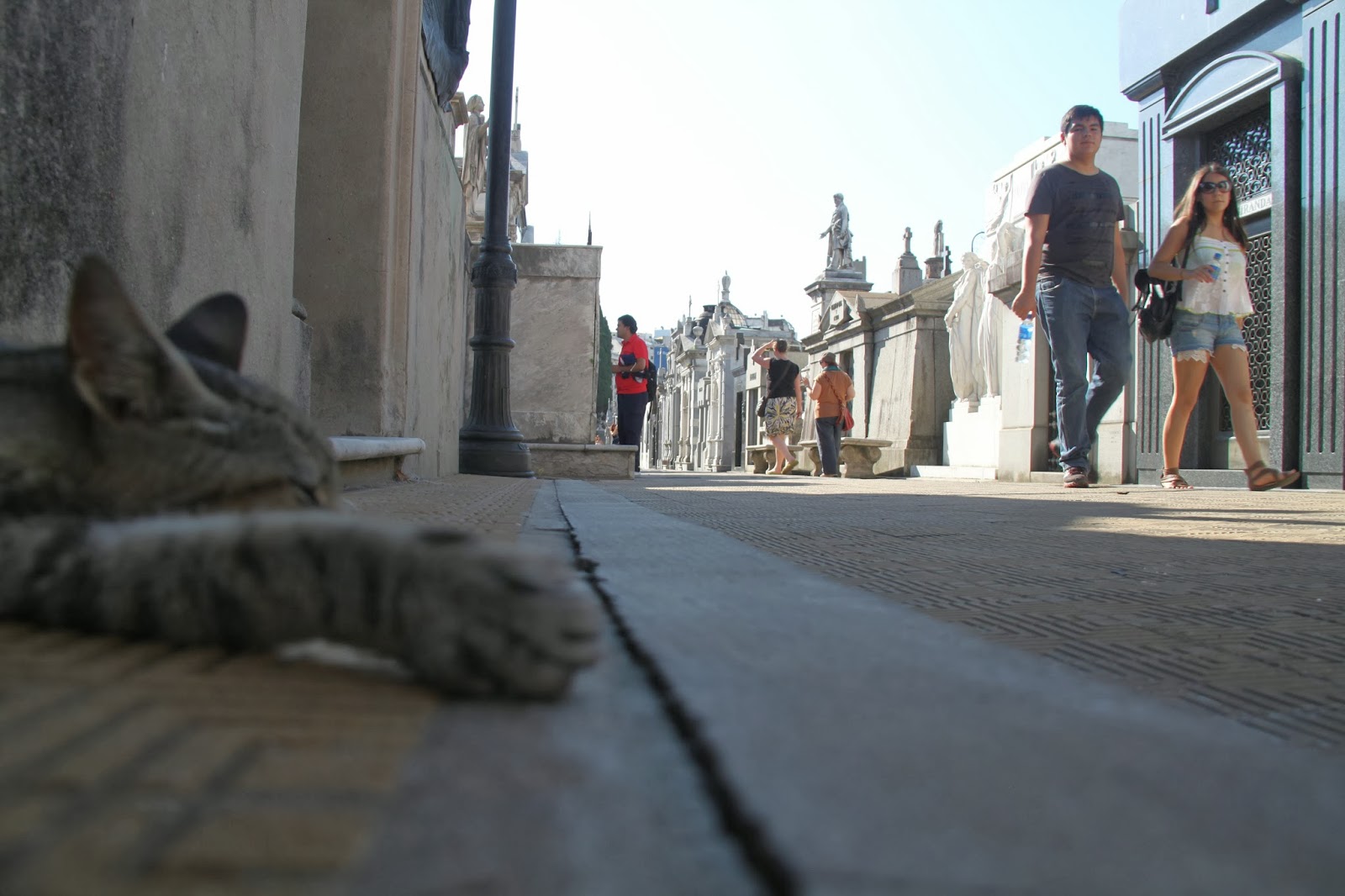
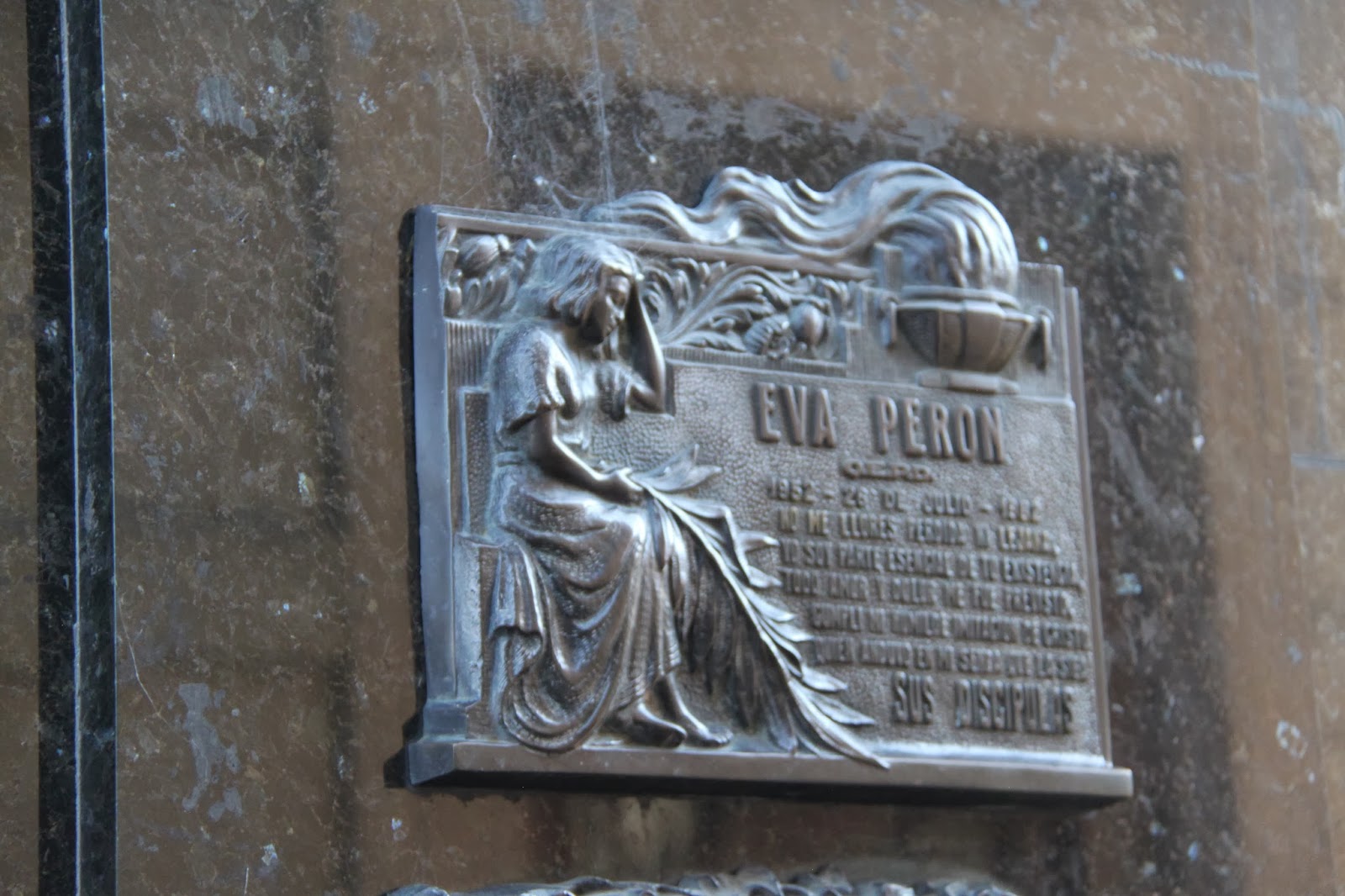
Amidst the urban sprawl and rich suburbs of Buenos Aires lies a remarkable cemetery. Perhaps not unique in the world, nor is the style of it unusual (there is one in Bogota, albeit much smaller, just down the road). This one is, however, a huge tourist attraction. Perhaps it is not the style or the habit, or the gothic morbid fascination that people hold for death and the afterlife, but it has been made famous because of Evita. This is Former Argentine First Lady Eva Peron's final resting place and it has become a place of pilgrimage and fascination for many.

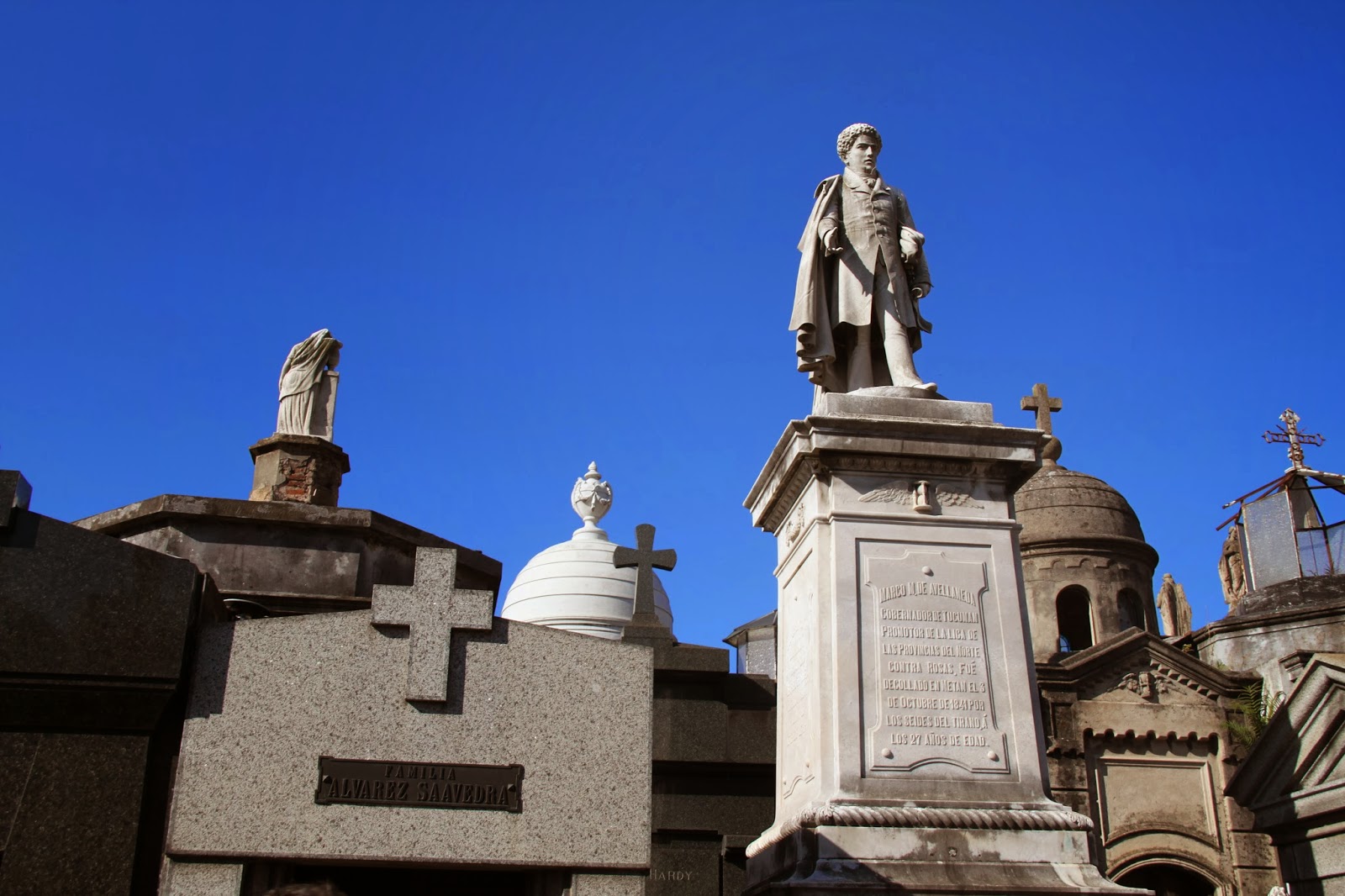
In this city within the city, the streets are lined with marvelous tombs decorated in the most over-the-top manner, and often a peek inside will yield a glimpse of the tomb going down several floors to the family's ancestor's. Each mausoleum, crypt or tomb is unique and special and the styles vary from art deco to art nouveau, to baroque or neo-gothic.

This cemetery is a glimpse into the lives *ahem* deaths, of the rich and famous. 4691 crypts hold politicians, presidents (at least 10!), generals, caudillos, coronels, and heroes, and everyone else who was anyone. 94 are so important as to be declared national monuments. There's a famous boxer, a Chemistry Nobel Laureate, governors, patriots, writers and diplomats. The blog http://www.recoletacemetery.com/ has an amazing collection of stories about the who's who, with photos and details of both the tomb and their lives. Built around the Church Our Lady of Pilar in the early 18th century, it became public land after 1822 upon decrees of the Governor of the time. It's layout was designed by a French architect, and it was remodeled occasionally, but most recently in 1881.

Source: Lonely Planet Argentina, 8th Edition (2012)
http://en.wikipedia.org/wiki/La_Recoleta_Cemetery